In Indonesia’s fast-growing digital economy, businesses are facing increasing cyber threats, tighter regulatory oversight, and rising expectations from customers regarding data protection. If you’re wondering, “What is ISO 27001 and why is it important for my Indonesian business?”, this guide will give you clarity.
ISO 27001 is the internationally recognized standard for Information Security Management Systems (ISMS). For companies operating in Indonesia—whether SMEs, fintech startups, IT companies, e-commerce platforms, manufacturing firms, healthcare providers, or multinational corporations—achieving ISO 27001 certification in Indonesia demonstrates a strong commitment to safeguarding sensitive information and meeting regulatory compliance requirements.
Let’s explore what ISO 27001 is, how the certification process works in Indonesia, and how it strengthens your organization’s cybersecurity framework.
What is ISO 27001?
ISO 27001 is a globally accepted standard for establishing, implementing, maintaining, and continually improving an Information Security Management System (ISMS).
It provides a structured, risk-based framework that helps Indonesian organizations:
Identify and evaluate information security risks
Implement appropriate technical and organizational controls
Protect sensitive business and customer data
Prevent cyberattacks and data breaches
Ensure regulatory compliance in Indonesia
For companies seeking ISO 27001 consulting services in Indonesia, certification proves that your organization follows international best practices in information security management.
Key Benefits of ISO 27001 Certification for Indonesian Businesses
No.
Benefit
How It Helps
1
Protection Against Cyber Threats
Reduces risks of cyberattacks and data breaches through structured risk management.
2
Business Continuity
Improves incident response and disaster recovery preparedness.
3
Increased Customer Trust
Builds credibility with Indonesian clients, government agencies, and international partners.
4
Regulatory Compliance
Supports compliance with Indonesia’s data protection regulations and sector-specific cybersecurity laws.
5
Competitive Advantage
Enhances eligibility for tenders requiring ISO 27001 certification in Indonesia.
6
Reduced Financial Risk
Minimizes financial losses caused by security incidents and penalties.
7
Strong Security Culture
Promotes awareness and accountability among employees.
8
Centralized Risk Management
Establishes a unified system to manage information security risks effectively.
How ISO 27001 Strengthens Cybersecurity in Indonesia
Risk-Based Security Approach
ISO 27001 requires Indonesian businesses to identify, assess, and prioritize risks based on their likelihood and impact, ensuring efficient resource allocation.
Implementation of Security Controls
Controls such as access management, encryption, supplier risk management, and data handling procedures are systematically implemented.
Improved Incident Response
Documented incident response plans ensure quick detection, response, and recovery from cyber incidents.
Supply Chain Security
Third-party vendors and partners are assessed to reduce external cybersecurity risks.
Business Resilience
Business continuity planning ensures critical systems remain operational during major disruptions.
Continuous Improvement
Regular internal audits and management reviews help organizations stay aligned with evolving cyber threats in Indonesia.
Common Challenges in Achieving ISO 27001 Compliance
Lack of senior management commitment
Limited in-house cybersecurity expertise
Complex risk assessment and documentation processes
Employee resistance to new policies
Difficulty defining ISMS scope
Integration with existing business operations
Maintaining continual improvement
Budget and resource limitations
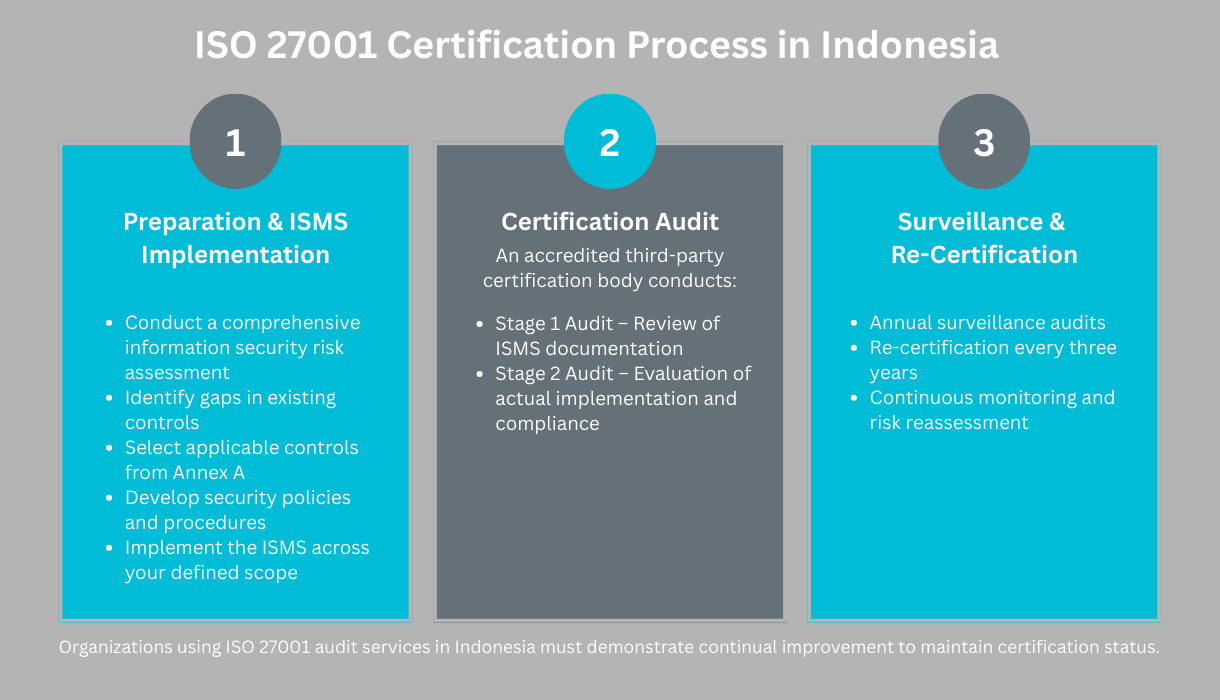
Steps to Prepare for ISO 27001 Implementation in Indonesia
Secure Leadership Commitment
Define the scope of your ISMS and obtain full management support.
Form an Implementation Team
Appoint a project leader and involve IT, HR, legal, compliance, and operational departments.
Conduct a Risk Assessment
Identify, analyze, and evaluate information security risks across your organization.
Develop a Risk Treatment Plan
Select appropriate Annex A controls to address identified risks.
Develop Required Documentation
Prepare essential documents such as the Information Security Policy, Risk Assessment Report, and Statement of Applicability (SoA).
Conclusion: Get ISO 27001 Certification in Indonesia
Understanding what ISO 27001 is and how it protects your organization is the first step toward building a secure and resilient business in Indonesia.
If you are looking for:
ISO 27001 certification in Indonesia
ISO 27001 audit services Indonesia
ISO 27001 consulting Indonesia
ISMS implementation Indonesia
Information security compliance services
Partner with a trusted ISO consultant Pte Ltd in Indonesia to ensure smooth implementation, faster certification, and sustainable compliance success.
Strengthen your cybersecurity posture, protect your digital assets, and build lasting trust with clients—start your ISO 27001 certification journey in Indonesia today.